Epoxy Floor Coating FAQs That Help You Choose With Confidence
Proudly Taking Care of The Greater Charleston Area
Epoxy floor coating helps protect concrete from stains, moisture, abrasion, and everyday wear while creating a clean, professional finish. Homeowners and businesses can benefit from a durable, easy-to-maintain surface designed around their property's needs. We serve customers in North Charleston and Mount Pleasant, helping residential and commercial clients find the right coating for garages, patios, shops, and high-traffic workspaces. Based in Summerville, we provide professional installation with careful preparation, quality materials, and attention to detail.
Our epoxy floor coating solutions across the Greater Charleston Area help protect concrete, improve appearance, and simplify routine maintenance.
Whether you're upgrading a garage or preparing a commercial workspace for daily operations, we can recommend a coating system suited to your concrete, traffic levels, and maintenance expectations. Explore our [epoxy floor coating] homepage link to learn more about our approach, installation standards, and available warranty coverage.
Concrete is strong, but it is not immune to damage. Unprotected surfaces can absorb oil, cleaning products, moisture, and other substances that leave stains or gradually weaken the material. Vehicle tires, abrasive dirt, heavy equipment, and constant foot traffic can also wear down the surface. Over time, neglected concrete may develop cracks, surface deterioration, and persistent dust that makes routine cleaning more difficult.
Professional epoxy floor coating provides a protective layer designed to help resist these common problems. When the coating system is correctly selected and installed, it can limit the penetration of spills, improve cleanability, and create a more uniform appearance. Decorative flakes, quartz aggregates, and specialized finishes also give property owners options for balancing aesthetics with practical performance.
Proper installation is particularly important because coatings depend on a sound, well-prepared concrete surface. Applying material over dirt, existing coating failures, or excessive moisture can contribute to bubbling, peeling, and adhesion problems. Professional installers evaluate the slab before selecting compatible primers, basecoats, and protective topcoats.
The right coating can also make a space more functional. A garage may benefit from resistance to automotive fluids and hot-tire pickup, while a workshop may require additional traction and abrasion resistance. Commercial facilities may need chemical resistance, clearly marked work areas, or a finish that tolerates frequent cleaning. Choosing a system based on actual use helps avoid paying for unnecessary features or installing a coating that cannot meet the demands of the space.
A long-lasting coating begins well before the first layer of material is applied. follows a preparation-focused process designed to establish a reliable bond and create a consistent finish.
1. Inspecting and Testing the Concrete
The first step is evaluating the slab's condition. Installers look for cracks, surface deterioration, previous coatings, contamination, and signs of moisture-related problems. Depending on the project, moisture testing and other surface assessments help determine which products and preparation methods are appropriate.
2. Preparing the Surface
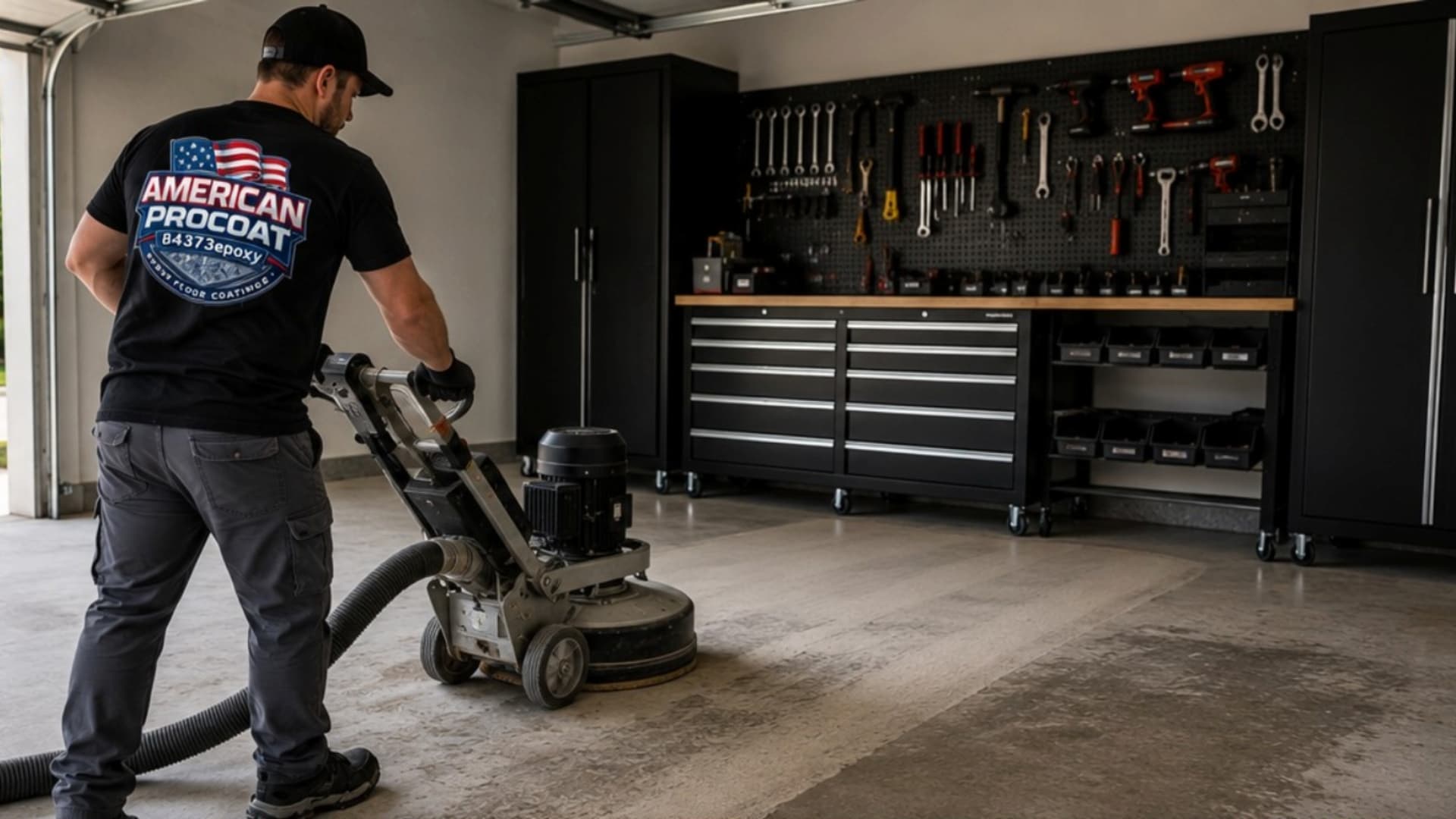
Industrial diamond grinding removes weak surface material, contaminants, and unsuitable existing finishes while creating the profile needed for adhesion. Simply washing or sweeping concrete is generally not enough to prepare it for a professional coating. Thorough mechanical preparation helps the new system bond to the slab rather than relying on a potentially weak surface layer.
3. Repairing Cracks and Surface Defects
Cracks, chips, and damaged areas are evaluated and repaired with compatible materials where appropriate. Existing joints are assessed to determine how they should be treated, since some joints need to remain capable of movement. Addressing these details before coating helps create a more consistent finished surface.
4. Applying the Primer and Basecoat
The appropriate primer or basecoat is applied according to the selected system's requirements. Some slabs may need a specialized moisture-mitigation primer before additional coating layers can be installed. Product compatibility, application thickness, temperature, and curing conditions all influence the finished result.
5. Adding Decorative Flakes or Traction Materials
Decorative vinyl flakes can provide color variation and help create a textured appearance. Quartz aggregates may be suitable for projects that require additional texture or specialized performance. The amount and type of aggregate depend on the desired finish, cleaning requirements, and traction needs.
6. Removing Excess Material and Applying the Topcoat
After the decorative layer has cured as required, excess aggregate is removed and the surface is prepared for the final coating. A compatible polyaspartic, polyurethane, or other specified topcoat can provide additional protection and influence the floor's gloss, texture, chemical resistance, and UV stability.
7. Allowing the Coating to Cure
The completed surface must cure according to the product specifications before it is exposed to foot traffic, vehicles, equipment, or cleaning. The timing varies by system and environmental conditions. Professional scheduling helps ensure that the floor is not put back into service prematurely.
This step-by-step approach gives property owners a clearer understanding of the work involved and why professional preparation matters. It also helps identify potential problems before they compromise the finished coating.
Not every concrete floor has the same requirements. The best coating system depends on how the space is used, what the slab is exposed to, and the performance expected from the finished surface.
Residential Concrete Floors
Garages, utility rooms, mudrooms, covered patios, and other residential spaces can benefit from a coating that makes cleaning easier and improves the appearance of worn concrete. Garage floors may need protection from automotive fluids, road grit, and hot tires, while utility areas may require a practical finish that stands up to frequent use.
Our residential floor coating options can be tailored to the property's layout, preferred appearance, and maintenance needs. Homeowners can discuss decorative flakes, finish sheen, and traction options to determine which features make sense for each area.
Commercial and Industrial Floors
Commercial properties often face heavier traffic, more frequent cleaning, and greater demands on surface performance. Workshops, showrooms, warehouses, retail spaces, service bays, and production areas may need different levels of chemical resistance, abrasion protection, and traction.
With commercial floor coating, businesses can consider the operational requirements of their facilities before selecting a system. Factors such as wheeled equipment, foot traffic, cleaning products, safety markings, and scheduling restrictions all influence the recommendation.
Specialty Coating Requirements
Some projects require more than a standard decorative finish. Anti-slip quartz systems can add texture in areas exposed to water, while chemical-resistant coatings may be appropriate for certain work environments. Moisture-mitigation primers can also be considered when testing identifies conditions that require additional preparation.
Outdoor or sun-exposed concrete needs particular attention because some epoxy products can discolor under prolonged UV exposure. A compatible UV-stable topcoat may help maintain the appearance of the finished system. The right solution depends on the complete coating system rather than any single product.
Evaluating the intended use of the floor before installation can help property owners choose a finish that balances durability, appearance, maintenance, and project cost.
Once the coating has fully cured, routine care is generally straightforward. Regular sweeping or dust mopping removes sand, grit, and debris that can gradually wear the finish. A microfiber mop or soft-bristle broom is useful for everyday cleaning, particularly in garages and other areas where outdoor dirt is frequently tracked inside.
For deeper cleaning, use a mild, non-abrasive cleaner approved for the coating system. Avoid harsh chemicals, abrasive scouring pads, and metal brushes unless the manufacturer specifically approves them. Cleaning up oil, automotive fluids, and other spills promptly can help preserve the appearance of the surface.
Entry mats can reduce the amount of dirt and moisture brought into the space. For heavy tool chests, appliances, and movable equipment, use appropriate protective pads or soft wheels to reduce the risk of scratches and impact damage. Avoid dragging heavy objects across the floor.
Coated concrete should also be inspected periodically for chips, cracks, or areas where the finish appears to be separating. Addressing damage early may help prevent the affected area from deteriorating further. If bubbling, peeling, or persistent moisture appears, have the cause evaluated rather than applying another coating directly over the problem.
Coastal weather and humidity can influence both installation and maintenance. Moisture management, suitable product selection, and proper curing are important considerations for long-term performance. Following the installer's care instructions helps protect your investment and maintain a clean, functional surface.
American ProCoat LLC was founded by Jayson Horton, a U.S. Navy veteran who built the company around craftsmanship, honest service, and attention to detail. After seeing the problems that can result from inadequate surface preparation and installation shortcuts, he established an approach centered on appropriate materials and a thorough process.
That commitment matters because even premium coating products can fail when the concrete underneath them has not been properly evaluated or prepared. Our team considers the slab's condition, intended use, and environmental conditions before recommending a system.
Customers can expect clear communication throughout the project, from the initial assessment to the final application. We explain the recommended preparation, coating materials, and curing requirements so you can make an informed decision about your property.
We also offer free estimates to help homeowners and business owners understand their options before committing to a project. Our installations are backed by a lifetime warranty, with applicable coverage and terms provided for review. Veterans' discounts are available as well.
Whether you're improving a residential garage or updating a demanding commercial workspace, our goal is to deliver a finished floor that looks professional, performs as intended, and is easier to maintain. Ask your installer about the specific coating system and written warranty terms so you can make an informed decision before moving forward.




Bringing Premium Floor Coatings to Charleston-Area Properties
American ProCoat LLC delivers high-quality epoxy floor coating options to residential and commercial properties throughout the Charleston region, combining premium materials with professional installation for durable, attractive results. We proudly serve property owners in the following communities and surrounding areas:
- Charleston, SC
- Daniel Island, SC
- Goose Creek, SC
- Hanahan, SC
- Moncks Corner, SC
- Mount Pleasant, SC
- North Charleston, SC
- Summerville, SC
- West Ashley, SC